Category Archives: News

D-Day: The day the world changed.

June 6th:  Today is the day the world changed.

To be more specific, it was 75 years ago today when Operation Overlord began and the rugged Normandy coast produced names that will be honored for all history…Omaha Beach, Utah Beach, Gold Beach, Sword Beach, Juno Beach…as well as the names of the more than 150,000 brave American, Canadian and British soldiers, sailors and marines who stormed those beaches.

On that one day of the largest amphibious assault of all time, over 9,000 Allied troops were wounded, and over 4,000 were killed. Many of them are still there. Visiting the American cemetery at Normandy is one of the most solemn and moving events you will ever experience. June 6, 1944 witnessed a monumental effort as the mute testimony of countless rows of crosses and stars still reveals.

As General Dwight D. Eisenhower observed “The eyes of the world are upon you”, and so they were. And they still are.
To all the brave men and women who changed the world that day, who opened the gate in the heroic fight against fascism and the inconceivable evils of the Third Reich, we and future generations salute you, and neither we, nor the world, will ever forget.
Facts About 1,4-Dioxane

Commissioner-Run Water Districts’ Commitment to Water Quality

The mission of each commissioner-run District is to maintain and deliver an uninterrupted supply of the highest quality water to its consumers.

To that end, we ensure public health and safety, actively promote the conservation of our most precious resource, cooperate with all local, county, state and federal authorities, and pledge to fulfill this mission in an efficient, economical and environmentally sound manner.

Each District’s commitment to providing our communities with high-quality water is unwavering. We take an immense amount of pride and dedication in providing consumers throughout each of our Districts with water that meets or surpasses all federal, state and local standards. Whenever there is a need for treatment, we take a proactive approach and invest what is necessary to ensure the safety and quality of our water.

Q. What is 1,4–Dioxane?

1,4-Dioxane is a synthetic chemical historically used as a stabilizer for industrial solvents, predominantly 1,1,1-trichloroethane (TCA). Apart from its widespread use as a solvent stabilizer from the 1950s through 1990s, it is used in small concentrations in a variety of applications, such as inks, adhesives, and pharmaceuticals. It is also present in trace amounts in certain consumer products such as detergents, shampoos, and cosmetics as a byproduct of the manufacturing process.

Q. How Does 1,4-Dioxane Get Into Drinking Water?

On Long Island, we rely on groundwater for our drinking water supply. 1,4-Dioxane has reached that groundwater primarily because of industrial manufacturing operations on Long Island. Once dioxane reached the ground from routine spills or disposal straight to the soil, it could migrate to the groundwater and persist for many years. Additionally, trace amounts of 1,4-dioxane present in household products (such as shampoo) get

washed down the drain and seeps into the ground, eventually entering Long Island’s aquifer.

Q. Is 1,4-Dioxane Regulated?

There is currently no chemical-specific Federal or New York State drinking water standard for 1,4-dioxane. The U.S. Environmental Protection Agency (EPA) has listed 1,4-dioxane as a probable human carcinogen, but at present the EPA has no plans for establishing water quality standards for the compound. The New York State Department of Health (NYSDOH) currently regulates 1,4-dixoane as an Unspecified Organic Contaminant (UOC). UOCs have a blanket Maximum Contaminant Level (MCL) of 50 parts per billion (ppb). No Long Island water supplier exceeds that level. In December 2018, the New York State Drinking Water Quality Council proposed a recommended drinking water quality MCL of 1.0 part per billion (ppb). NYSDOH is presently reviewing this recommendation and preparing draft standards for the regulation of 1,4-dioxane. The Commissioner of Health may consider a higher or lower MCL based on additional review of health impact data. A draft regulation is planned to be issued sometime in 2019, followed by a 60-day comment period. Implementation of a standard could occur as early as 2020.

Q. What Actions Are Being Taken by to Address 1,4-Dioxane?

While waiting for the State to finalize its process of establishing an MCL, commissioner- run Districts have taken every precaution necessary to test, monitor and assess all water sampling for 1,4-dioxane. Districts have also put in place operational measures to reduce any potential exposure, and aggressive water sampling is conducted regularly. This advanced planning has placed commissioner-run Districts in a very favorable position to implement wellhead treatment as quickly as possible once an MCL is set. Districts are planning significant investments in wellhead treatment through grants and bonding.

Q. What Sort of Treatment Is Required?

Pilot studies undertaken by Long Island water providers have demonstrated that Advanced Oxidation Process (AOP) effectively removes 1,4-dioxane from drinking water. Comprehensive testing and quality control are required for 1,4-dioxane removal because of the by-products generated by the advanced oxidation process.

Q. When Will Treatment Be Implemented?

Rest assured that commissioner-run Districts are undertaking proactive action to position each District to implement effective wellhead treatment as soon as possible. 1,4-Dioxane is not the first threat to Long Island’s drinking water source. By working with leading water authorities, local elected officials and legal professionals, commissioners are actively addressing this issue. All Long Island water providers are currently taking steps to monitor, and as necessary, remove this compound from our water supplies to ensure that drinking water meets all applicable local, state and federal quality standards.

Q. Are There Any Health Risks Associated with 1,4-Dioxane?

The EPA has estimated the concentration of 1,4-dioxane in water corresponding to an increased lifetime cancer risk of one-in-a-million, assuming consumption of 2 liters of

water per day every day for a lifetime 70 years, which is 0.35 ppb. This health-protective criterion is often used as a non-regulatory benchmark for minimal risk. The Federal Consumer Product Safety Commission (FCPSC) continues to monitor for 1,4-dioxane in consumer products, and legislation has been proposed to regulate and restrict chemicals such as 1,4-dioxane. Many personal care product companies are beginning to voluntarily remove this chemical from their products.

Q. What About Home Water Treatment Devices And Bottled Water?

Regulations for 1,4-dioxane in bottled water, which are enforced by the U.S. Food and Drug Administration (FDA), have not been developed. Bottled water manufacturers may have specific information on 1,4-dioxane levels for their products. At present there are no NSF or UL certified home water treatment devices available for the removal of 1,4- dioxane.
Where Can I Find More Information About 1,4-Dioxane?

Q.  Where Can I Find More Information About 1,4-Dioxane?


Q. Where Can I Find Information About Water Quality In Each Commissioner-Run District?

Each commissioner-run District ensures all consumers that your tap water is safe to drink. Consumers can call their respective District and request a copy of their Annual Drinking Water Quality Report. These reports are available at the District office, local libraries or on the website of each respective District.

Water Taste Contest Begins May 6th!

AWWA Drinking Water Week* is just about here. That means that Long Island’s water suppliers will once again compete to see who will be judged by the public as the very best tasting water in each county. Who will take home the trophies for “Best Tasting Water” in 2019? On May 6th, the contest is open to all. Have a drink on us!

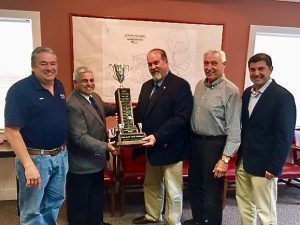
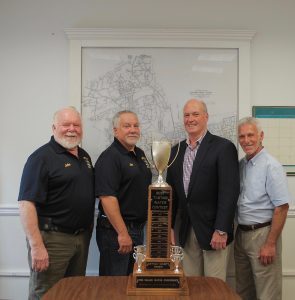
Last year’s winners were both NSWCA members. In Suffolk County, the Greenlawn Water District was judged to be the best, while in Nassau County, voters chose the Oyster Bay Water District as the best tasting. Will they repeat in 2019? Or will the previous year’s winners, South Huntington Water District (Suffolk) and Franklin Square Water District (Nassau) reclaim the title?  Or will other suppliers take home the gold?No one knows for sure, but by sampling and voting, residents of all districts can weigh in on this most important topic.

Organized by the Public Relations Committee of the Long Island Water Conference, the 2019 Water Taste Contest will take place May 6th through May 10th at the 50,000-square foot SUNY Farmingdale Campus Center. The NSWCA urges all members to volunteer and to assist the Public Relations Committee in manning the informational display booth.

Please notify Tim McGuire at H2M if you are interested in participating in this year’s water taste contest via email: tmcguire@h2m.com or phone: 631-756-8000 ext.1415.

For more than 40 years the American Water Works Association and its members have celebrated Drinking Water Week – a unique opportunity for both water professionals and the communities they serve to join together in recognizing the vital role that water plays in our daily lives. Please join AWWA as we celebrate drinking water! This year the theme is “Protect the Source”.


Oyster Bay Water District


Greenlawn Water District


*

New 2019 NSWCA Board Elected

Nassau Suffolk Water Commissioners’ Association (NSWCA) Elects New 2019 Board

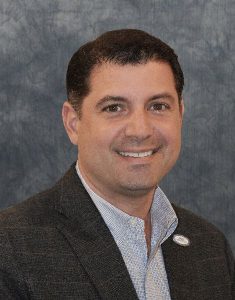
Oyster Bay Water Commissioner Michael F. Rich III named President

At a recent Nassau Suffolk Water Commissioners’ Association (NSWCA) meeting sponsored by  the Massapequa Water District, the Association elected a new Board for the 2019 term, which runs through December 31, 2019. Massapequa Commissioner and former NSWCA President Raymond J. Averna, Commissioner Thomas P. McCarthy and Commissioner Francis J. Flood hosted the meeting.

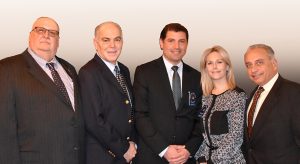
The newly elected NSWCA 2019 Board includes incoming President Michael F. Rich III of the Oyster Bay Water District who succeeds outgoing NSWCA President Vincent Abbatiello; 1st Vice President William Schuckmann of the Hicksville Water District; 2ndVice President Kenneth P. Wenthen Jr. of the West Hempstead Water District; Secretary Amanda Field of the Plainview Water District; and Treasurer Lawrence F. Zaino Jr. of the Carle Place Water District.

Left to right: William Schuckmann, Kenneth P. Wenthen Jr., Michael F. Rich III, Amanda Field, Lawrence F. Zaino Jr.

“Speaking on behalf of this outstanding NSWCA Board, we are looking forward to a very active year in 2019,” President Rich stated. “There has been a great upsurge in interest about Long Island’s water and aquifer as well as conservation and long term sustainability, which is long overdue. Ensuring purity and supply while protecting our sole source aquifer requires continual education. As the suppliers closest to the water, the NSWCA plans expansion of our Educational Series and Seminars in 2019 to provide Commissioners from all 21 member districts and the public they serve with the latest scientific and environmental information relating to Long Island water issues and concerns.”

Bader on LIWC Board

Plainview Water District Commissioner Andrew N. Bader, has been selected to serve on the Board of the Long Island Water Conference. Mr. Bader, a former President of the Nassau Suffolk Water Commissioners’ Association (NSWCA) and a member of the American Water Works Association (AWWA) brings over ten years of water industry management as well as extensive financial expertise to the Long Island Water Conference Board.

Since its inception in 1951, the Long Island Water Conference has touched all phases of water supply and management in Nassau and Suffolk Counties. Members include the 21 NSWCA commissioner-run water districts, as well as major water suppliers, both public and private.

Glenwood Hits The Century Mark

In 2019, the Glenwood Water District begins its 100th year of dedicated service to the public.

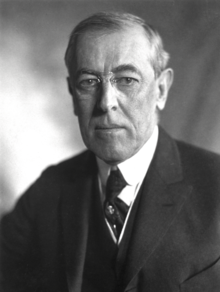
When it was formed a century ago, Woodrow Wilson was serving his second term as the 28th President of the Untied States of America. The USA was part of the victorious Allied forces at the Paris Peace Conference in 1919. World War I, known then as The Great War had ended by Armistice at 11:00 on November 11, 1918, issuing in a new era.

Since its inception a century ago, the Glenwood Water District has delivered the highest quality water virtually without interruption by hurricanes, hard winters and even Superstorm Sandy! Congratulations to the Commissioners and the  staff of the Glenwood Water District on a job well done!

Manhasset-Lakeville Joins Suit

The Manhasset-Lakeville Water District joined eight other NSWCA member districts by filing a lawsuit against chemical manufacturers for the emerging contaminant 1,4 dioxane pollution in drinking water wells.

Separate lawsuits filed by legal firm Sher Edling LLP (San Francisco, California) include eight NSWCA member districts*, as well as the Water Authority of Great Neck North, and cite negligence, defective design and failure to warn about dangers, among other things.

Michael F. Rich III President of NSWCA stated, “the lawsuits represent a step in the right direction in addressing questions regarding groundwater on Long Island. They not only shed light on 1,4 dioxane, but also draw attention to the potential for other emerging contaminants and properly assign responsibility with the manufacturers and polluters of the water supply. Why should Long Island residents be forced to pay for 1,4 dioxane treatment and clean up when they are the victims? The answer is they should not, and these actions put the potentially huge costs for cleanup and remediation squarely on the shoulders of those who created the situation in the first place.”

* (Albertson Water District, Carle Place Water District, Garden City Park Water District, Jericho Water District, Oyster Bay Water District, Port Washington Water District, Roslyn Water District, West Hempstead Water District)

Welcome New & Returning Members!

It happens every fall and 2018 was no exception.

Michael F. Rich III

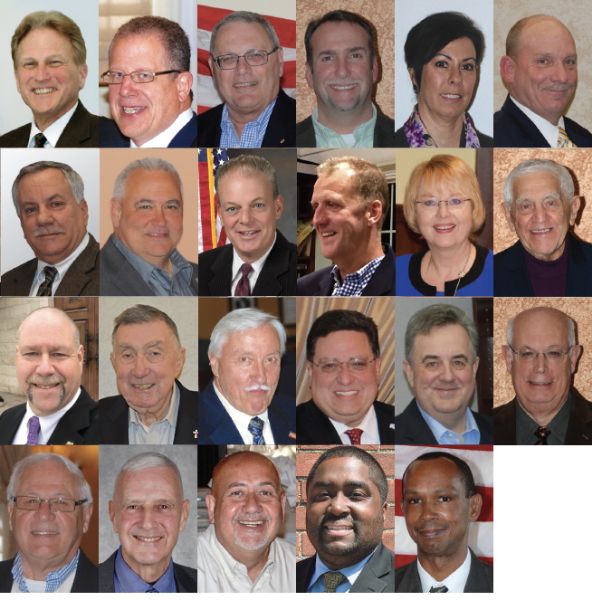
The greatest American institutional process was once again put into play on December 11, 2018 as voters went to the polls in record numbers to elect water commissioners in 21 districts in Nassau and Suffolk counties. The NSWCA welcomes the new and selected men and women and wishes them well in their respective positions. Each newly elected or re-elected commissioner will serve a three-year term beginning January 1, 2019 through December 31, 2021.

NSWCA First Vice President and Oyster Bay Water District Commissioner Michael F. Rich III commented on the election results. “With the election process being hyper-local and so close to the community, the vote of each individual truly counts,” he said. “I am extremely pleased to welcome both our new colleagues and returning colleagues to NSWCA. Commissioner-run water districts enable all registered residents to express their personal preferences for the men and women of their choice at the ballot box through the voting process. It also helps ensure that present day economic goals as well as longer term goals such as conservation, sustainability and aquifer health are truly reflective of the mindset of all 21 communities.”

The NSWCA congratulates the following Long Island water district new elected and re-elected commissioners on their three-year term election:

  • Howard Abbondondelo, Albertson Water District, Re-elect
  • John F. Coumatos, Bethpage Water District, Re-elect
  • Italo J. Vacchio, Carle Place Water District, New elect
  • Glenn Barnett, Cathedral Gardens Water District, Re-elect
  • Madeline Presta, Franklin Square Water District, Re-elect
  • Chris Engel, Garden City Park Water District, Re-elect
  • James M. Logan, Greenlawn Water District, Re-elect
  • Karl M. Schweitzer, Hicksville Water District, Re-elect
  • Thomas A. Abbate, Jericho Water District, Re-elect
  • Peter Brown Locust Valley Water District, New elect
  • Patricia Peterson, Locust Valley Water District, New elect
  • Louis P. Savinetti Locust Valley Water District, Re-elect
  • Brian Morris, Manhasset-Lakeville Water District, Re-elect
  • Francis J. Flood. Massapequa Water District, New elect
  • Richard Niznik, Oyster Bay Water District, Re-elect
  • Andrew Bader, Plainview Water District, Re-elect
  • David Brackett, Port Washington Water District, Re-elect
  • Michael Kosinski, Roslyn Water District, Re-elect
  • John Hirt, South Farmingdale Water District, Re-elect
  • Joseph Perry, South Huntington Water District, New elect
  • Joseph Marando, West Hempstead Water District, Re-elect
  • Rodney Caines, Westbury Water District, New elect
  • Barry Green, Westbury Water District, New elect
  • Bernard McCabe, Glenwood Water District, Re-elect (not pictured)


Note:
 There are three water district commissioner positions in each district. District residents vote for one of the three commissioner positions each year. Due to the passing or resignation of commissioners in 2018, the Locust Valley Water District and the Westbury Water District had elections for more than one commissioner seat.

Day In Day Out Coverage

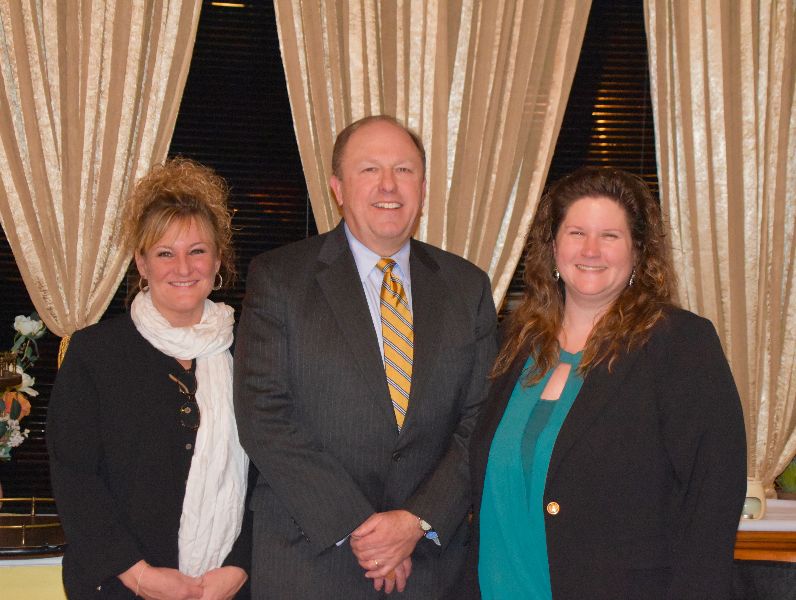
Donna Lupo, James J. Stanis and Donna Zuzio of J.J. Stanis and Company, Inc.

Providing an uninterrupted supply of water day in day out may not be quite as dangerous as the daily routines of police and fire services, but it is certainly not without its hazards. Protecting each district’s workforce with reliable insurance coverage is a necessity. A trio of experts from J.J. Stanis provided an important overview of new insurance products that addressed the concerns of commissioners in this area. The NSWCA recently welcomed guest speakers James J. Stanis, Donna Lupo and Donna Zuzio of J.J. Stanis and Company, Inc., a third-party health insurance administrator whose presentations included programs for both affordable dental and vision coverage.

Jim Stanis is the past Chair of the Business Associate Advisory committee of the New York State Association of School Business Officials (ASBO-New York), and is responsible for the planning of annual industry events in New York State including their annual conference.

Donna Zuzio, Account Executive has been in the insurance industry since 1998 and received her Bachelor of Administration Degree in Finance from Hofstra University.

Donna Lupo, Account Executive, began her career in 1986 and has worked with Met Life, Oxford and Olsten Health Services. Donna provides Sales and Service to a variety of businesses ranging from sole proprietorships to corporate accounts.

LVWD Superintendent, Charles Savinetti Jr.

The meeting was hosted by the Locust Valley Water District. LVWD Superintendent Charles Savinetti Jr. provided an update and overview of the district.

Drinking Water Symposium

The LIWC Drinking Water Symposium brought together water quality experts, environmentalists, industry representatives and public officials including commissioners and superintendents from seventeen NSWCA member districts.

The Symposium focused on the evolution of treating for contaminants, the systems being implemented to treat for emerging and unregulated contaminants, and the impact of wastewater and on Long Island’s groundwater.

Chuck Savinetti, Chairman of the LI Water Conference and Superintendent of the Locust Valley Water District, provided opening remarks. Carrie Meek Gallagher, Region 1 Director, NYS DEC, provided the keynote address with her usual professionalism and grace.

The first panel discussion on “Evolution of Water Treatment: Meeting the Challenges Presented by Emerging Contaminants in Long Island’s Groundwater,” was moderated by Tyrand Fuller C.P.G, Lead Hydrologist for SCWA and 2nd Vice Chairman of the LIWC. The panel included Scott Meyerdierks, Lead Civil Engineer SCWA and James E. Neri, P.E., VP Water Division Director, H2M Architects & Engineers.

The ensuing panel was moderated by Rich Passariello, Superintendent of Roslyn Water District and 2nd Vice Chairman, LIWC on the topic “Wastewater and Its Impact on Groundwater: Treating Wastewater for Emerging Contaminants”. Panel experts included Peter Scully Suffolk County Deputy County Executive; Karen Gomez, Regional Engineer for Water and Remediation, NYS DEC; and Irene Fisher Hydrologist, US Geological Survey.

Former NSWCA President and Plainview Water Commissioner Andrew N. Bader provided incisive closing remarks.