Author Archives: admin29

Stan Carey on Aquifer Protection & LICAP

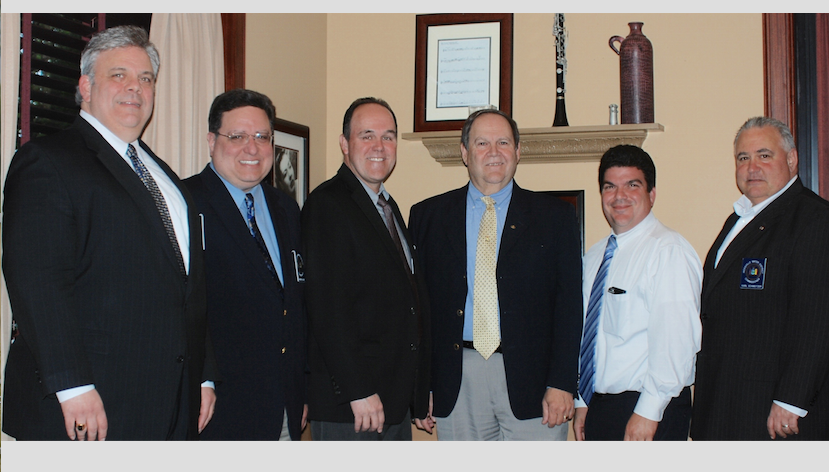
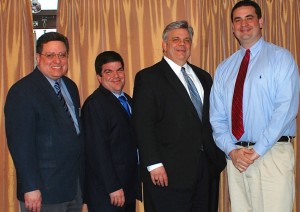
Massapequa Water District Superintendent Stan Carey, who is NSWCA¹s representative to the Long Island Commission for Aquifer Protection (LICAP), updated NSWCA members on the newly-formed LICAP commission. LICAP is a bi-county commission that addresses quantity and quality issues re: Long Island’s aquifer system including contamination, waste, saltwater intrusion, mismanagement and usage. The meeting was hosted by Locust Valley Water District Commissioners Pasquale J. Eliseo, Anker Johansen and Louis P. Savinetti.
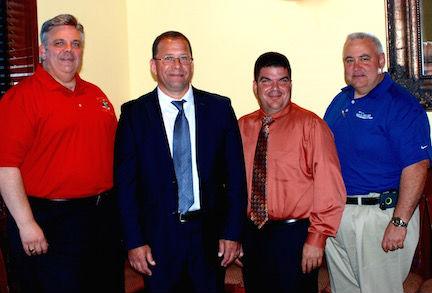
 

Stan Carey & NSWCA water commissioners meeting photo

During his address, Mr. Carey reported, “opening meetings reaffirmed LICAP’s mission, goals and deliverables. Significant among those are an annual State of the Aquifer Report and a history of Long Island¹s water supply and resources.  Equally important is the establishment of two committees, the 2040 Water Resource Opportunities Subcommittees and 2040 Water Resources and Infrastructure Committee.”

“LICAP has a very important role to play on a very important subject,” stated NSWCA President and Massapequa Water District Commissioner Thomas P. Hand.  “Through Mr. Carey¹s active involvement, the collective voices of NSWCA¹s 21 commissioner-run districts and all of those they represent will be heard. We endorse the comprehensive planning for the protection of Long Island¹s groundwater and the solutions to safeguard Long Island¹s aquifers.²

Appointed to LICAP by NSWCA Board of Commissioners for his vast experience and dedication to the water industry, Mr. Carey is a Suffolk County resident with 30 years of water utility experience and is Superintendent of Massapequa Water District, 2nd Vice Chairman of Long Island Water Conference, member of American Water Works Association and a volunteer fireman.  He has an Applied Science degree in Public Water Supply and is a certified water treatment operator. LICAP commission members are unpaid. 
                                                                                                                    

Kathleen Cannon On Budget Development

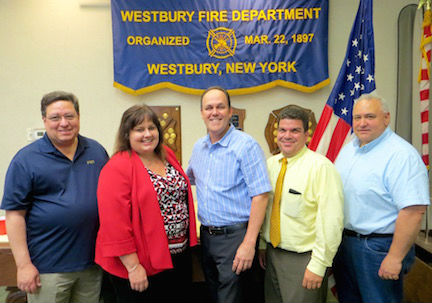
At a recent Nassau Suffolk Water Commissioners’ Association (NSWCA) Special Training Session hosted by Westbury Water District Commissioners Vincent Abbatiello, Kenneth O. Jones and William C. Olson, Kathleen Cannon, CPA and Business Manager of the Jericho Water District addressed the assemblage on the topic of “Fiscal Responsibilities of Commissioners & The Budget Process”.

Ms. Cannon’s incisive presentation included sections on the New York State Tax Cap and New York State Property Tax Freeze’s current law regarding government efficiency plans. Topics presented in detail were the key fiscal responsibilities of the Commissioners including developing and maintaining Water District policies & procedures, monitoring fiscal operations, conducting internal audits and developing an annual budget.

Kathleen Cannon IMG_1010

“Budget development is a serious process that requires meticulous attention to detail.” Ms. Cannon commented. “It requires a team effort that should be led by a Budget Officer with the ultimate responsibility of setting a realistic, structurally balanced budget on the Commissioners. Water Districts are required to submit an Annual Budget for approval from the Town in which they are located.”

NSWCA President Thomas P. Hand commented, “This is the latest in our series of Continuing Education and Training. It was particularly apropos because it helped prepare the Commissioners, Superintendents and Business Managers for their budget processes. Ms. Cannon’s ability to articulate the intricacies of each topic was greatly appreciated by all in attendance.”

Kathleen Cannon is a graduate of St. John’s University and also received her CPA license from the State of New York in 1993. Formerly the Comptroller at the Town of Huntington, Kathleen is currently the Business Manager at the Jericho Water District.

LI Water Quality Symposium

DSC_0204

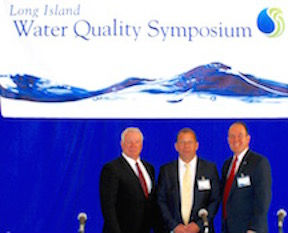
The NSWCA was well represented at the Long Island Water Quality Symposium held 10.22.15 at Carlyle On The Green. Virtually all 21 NSWCA member Districts were in attendance, and the conference covered a multitude of topics pertinent to both Nassau and Suffolk counties via four panel discussions. Stan Carey, NSWCA’s LICAP representative and Superintendent of Massapequa Water District updated the assembly on recent efforts by the LI Commission for Aquifer Protection.

NSWCA President and Massapequa Water District Commissioner Thomas Hand was moderator for the panel discussion on “Sustainable Infrastructure Management For The Water Industry.”

Port Washington Water District Commissioner Mindy Germain was a member of the panel discussing “The Quantity of Long Island’s Drinking Water” along with Jane Barbato, Water Conservationist with the Jericho Water District.

Former Oyster Bay Water Commissioner and current Nassau County Legislator, the Honorable Donald MacKenzie was part of the panel “What Your Elected and Government Officials Are Doing to Address Drinking water Concerns.

Franklin Square Water District Commissioner Ralph Pugliese, also 1st Vice Chairman of the LIWC, delivered the closing address of the Symposium.

Arnold Palleschi addresses NSWCA

At a recent Nassau Suffolk Water Commissioners’ Association (NSWCA) meeting hosted by Massapequa Water District Commissioners Thomas P. Hand, Joseph T. Tricarico, and Raymond J. Averna, guest speaker Mr. Arnold Palleschi, Chairman, Nassau County Water Resources Board, spoke on aquifer-related topics of concern to Long Island residents. Jericho Water District Commissioner Nicholas J. Bartilucci introduced the guest speaker.

Mr. Palleschi stressed the need for conservation and sustainability and addressed issues facing Long Island’s sole source aquifer. He stated, “The Nassau Water Resources Board was created to monitor issues of sustainability, both in quantity and quality of water supply.”

Mr. Palleschi added, “Our objectives include review of potential imminent, short term and long term threats to the quality and quantity of Nassau County’s groundwater resources. As such, the Nassau Water Resources Board monitors actions of neighboring groundwater suppliers and acts as liaison between Nassau County and NYS DEC to ensure that supplier actions do not adversely affect the County’s water supply.”

 Thomas P. Hand, President of the NSWCA, and Massapequa Water Commissioner, commented, “The NSWCA’s Continuing Education Series brings expert professionals in contact with our Commissioners who are closest to Long Island’s water supply. We greatly appreciate Mr. Palleschi’s informative presentation, and we endorse the protection of the county’s precious supply and concern for the wellbeing of residents.”

Currently a Senior Engineer at Dvirka & Bartilucci Architects & Engineers (Woodbury, NY), Mr. Palleschi has served as Commissioner of the Town of Hempstead Department of Water and was with the Town for over 35 years.

Peter Logan On Nitrate Removal

Karl Schweitzer, Ray Arena, Thomas P. Hand, Jericho WD Superintendent Peter Logan, Donald T. O'Brien Manhasset-Lakeville WD, Andy Bader Plainview WD, Vin Abbatiello Westbury WD

Karl Schweitzer, Ray Arena, Thomas P. Hand, Jericho WD Superintendent Peter Logan, Donald T. O’Brien Manhasset-Lakeville WD, Andy Bader Plainview WD, Vin Abbatiello Westbury WD

At a recent Nassau Suffolk Water Commissioners’ Association (NSWCA) meeting hosted by Commissioners Donald T. O’Brien, Brain J. Morris and Mark Saugvine of the Manhasset-Lakeville Water District, Peter Logan, Superintendent of the Jericho Water District, addressed the issue of nitrate removal. Mr. Logan was introduced by Jericho Water District Chairman and past NSWCA President, Nicholas Bartilucci, as part of the NSWCA’s Continuing Education and Training Series.

Mr. Logan noted that “On Long Island, sewage, septic systems and runoff from lawns carry nitrates into the groundwater. Consequently some areas are experiencing a significant rise in nitrate levels, which must be carefully monitored, and in many cases, managed through nitrate removal.

Mr. Logan referred to a proposed nitrate removal plant located in Jericho beneath the elevated water storage tank. “The project is three years in the making, not unusual for a project of this scope. Essentially, we will consolidate two wells with both elevated nitrate and VOC levels, via a proposed 12” transmission main, and combine the treatment into one large plant. Both wells will be treated at the one site, using ion exchange for removing the nitrates and Packed Tower Aeration for the VOC removal.”

NSWCA President Thomas P. Hand added “Given the need to protect Long Island’s sole source aquifer, Peter Logan’s presentation was informative and very timely. The expectation is that more nitrate removal systems will need to be built to accommodate the water needs of the Long Island population.”

Originally from Bay Ridge, Brooklyn, Mr. Logan is a long time Syosset resident. With the Jericho Water District since 1978, he has served as District Superintendent since 2003. Mr. Logan holds a IB Water Plant Operator’s license issued by the New York State Department of Health

Robin Greenwald On Polluter Liability

As part of the Nassau Suffolk Water Commissioner Association’s (NSWCA) Continuing Education Program, Robin Greenwald, Esq., head of the Environmental Toxic Torts Litigation Group for Weitz & Luxenberg, spoke to the commissioners regarding environmental polluter’s responsibility and Long Island’s water systems.

Ms. Greenwald, a former assistant chief of the U.S. Department of Justice’s Environmental Crimes Section, is recognized as one of this country’s top environmental lawyers, notably serving as a lead plaintiff counselor in the BP Gulf Oil spill.

The evening’s presentation discussed Long Island’s aquifers, the various pollutants that affect the communities’ watersheds and the responsibility of polluting parties. Ms. Greenwald began with a clear definition of polluting parties.

“Pollution comes from either facility polluters, defined as polluters that operate in your watershed, or product manufacturer polluters, where the manufactured product contains pollutants that escape into the environment and cause damage,” explained Ms. Greenwald. “Litigating for damages to our water resources is one way to ensure that both facility and manufacturers are responsible in their operation. When they are not, the law can hold the responsible parties liable for their damages.”

“As Long Island’s water resource can be affected by pollutants that seep into the earth from groundwater, it is particularly important to our individual districts that we, as water commissioners, remain vigilant in our watch and educated in our response options,” NSWCA President Thomas Hand commented.

The benefits of litigation can include recovery of the costs of filtration, building and installing of systems, the annual costs of operation and maintenance, funding for the necessary clean up of contaminated sites and prevention of future contamination.

Mike Ingham & Responsibilities Training

Westbury Water District Commissioners Vincent Abbatiello, Kenneth O. Jones and William C. Olson, hosted a NSWCA Training Meeting featuring legal expert Michael F. Ingham of Carman, Callahan & Ingham LLP (Farmingdale, NY) addressed the assemblage on the topic of “Water Commissioner Management Powers and Responsibilities”.

Mr. Ingham focused on the legal duties and powers of elected commissioners, beginning with a historical perspective that included discussion of the Kirkland Act, Town Law 215, precedence of the Nassau County Civil Divisions Act, and the responsibility of each district to achieve ‘maximum benefit/best value’. The Training Module was inclusive of the conduct of Executive Sessions and Work Sessions open to the public. The subsequent Q&A brought deeper discussion of several specific topics.

Andy Bader, Mike Ingham, Thomas Hand, Vin Abbatiello

Andy Bader, Mike Ingham, Thomas Hand, Vin Abbatiello

NSWCA President Thomas P. Hand commented, “This is the latest installment of our Continuing Education and Training Series. The hands on session delved into important governance issues that concern all commissioners, superintendents and professional personnel from commissioner-elected water districts. Mr. Ingham’s extensive field knowledge and ability to express the laws and regulations in a way that all could readily absorb was greatly appreciated by all attending.”

Mr. Ingham is a graduate of Hamilton College and New York University and received his law degree from St. John’s University School of Law. He joined Carman, Callahan & Ingham in 1981 and specializes in complex insurance coverage litigation and Appellate Practice

Responding To Newsday

In response to Professor Brinkmann’s April 6th editorial letter “Our approach to water is all wrong”, the Nassau Suffolk Water Commissioners’ Association (NSWCA) concurs that our public water supply aquifer is a precious natural resource requiring constant vigilance to ensure long-term sustainability. However, several references used in Professor Brinkmann’s editorial are not accurate comparisons of the situation regarding our sole source water supply.

First, the Long Island aquifer is in fact managed by one agency. The NYS Department of Environmental Conservation (NYSDEC) has complete authority over all local water suppliers with regard to withdrawal. The NYSDEC approves all well permits and receives monthly reports from all suppliers.

Second, in addition to the NYSDEC, an Aquifer Commission was formed in 2013 by both the Nassau and Suffolk County Legislatures to study Long Island’s aquifer and to furnish a report. This commission, called LICAP (Long Island Commission for Aquifer Protection), consists of a panel of experts from county health departments, public water suppliers, the Long Island Water Conference, Nassau Suffolk Water Commissioners’ Association, the USGS, Suffolk County Water Authority, Environmental Advocates and appointees from elected officials.

Third, the reference to southern California’s water situation is not relevant since it compares Long Island to a desert-like region with entirely different conditions. The Texas and Florida examples are similarly inaccurate. Neither has such a widespread aquifer system with recharge rates comparable to that of Long Island. In fact, in both of those hot climates, the pumping season is much longer than ours.

A fair representation would be to compare water rates of those communities with Long Island rates. In most cases, Long Island’s water rates are lower by nearly half.

As stewards closest to the source of Long Island’s water, we do agree that water conservation is imperative to long term sustainability. In addition, we maintain that the prime focus needs to be on the protection of our vital Long Island Aquifer system and the treatment and elimination of contamination.

Respectfully,

Thomas Hand,

President, Nassau Suffolk Water Commissioners’ Association

Examining Geothermal Energy

At a recent Nassau Suffolk Water Commissioners’ (NSWCA) meeting hosted by the Greenlawn Water District and Commissioners William Wieck, James Logan and John McLaughlin, energy expert John Franceschina, P.E. presented a comprehensive overview of Long Island’s Geothermal Energy options. The presentation was the latest in NSWCA’s Continuing Education Series.

Mr. Franceschina is the Senior Manager of Energy Efficiency and Demand Response at Lockheed Martin, recently the Manager of PSEG LI’s residential energy efficiency programs (January 2014 – March 2015) and current President of Long Island Geothermal Organization. He explained how geothermal is renewable, clean energy that uses the earth’s heat to provide high efficiency heating and cooling for new and existing construction.

“Geothermal energy is good for Long Island,” remarked Franceschina. “Geothermal systems reduce the use of oil and oil tanks, lower the carbon foot print, and lower energy rates. They emit no smoke and reduce our dependency on fossil fuels. Currently, there are over 2,500 geothermal HVAC installations on Long Island.”

NSWCA President and Massapequa Water Commissioner President Thomas P. Hand stated, “In theory, the NSWCA supports any program that creates a greener Long Island. However, geothermal energy requires boring 6 to 8 feet down and underground temperature exchanges. We must be vigilant to ensure that proper measures are taken to thwart potential problems below ground where our single source aquifer resource resides.”

John Russo addresses NSWCA

John Russo, Vice President of Blendex Industrial Corporation headed a presentation on special types of flooring for water districts and water departments.  Located in Lindenhurst, New York, Blendex is the largest, full service Epoxy Flooring Systems & wall systems contractor throughout the New York, New Jersey & Connecticut area.  Mr. Russo discussed the protective qualities and installation procedures of coating systems such as Urethane Flooring, MMA Flooring (Methyl Methacrylate), Epoxy Flooring & Polyurea flooring for use in mechanical areas and pump rooms. A lively question and answer session followed. John Rusoo Blendex