Author Archives: admin29

Facts About 1,4-Dioxane

Commissioner-Run Water Districts’ Commitment to Water Quality

The mission of each commissioner-run District is to maintain and deliver an uninterrupted supply of the highest quality water to its consumers.

To that end, we ensure public health and safety, actively promote the conservation of our most precious resource, cooperate with all local, county, state and federal authorities, and pledge to fulfill this mission in an efficient, economical and environmentally sound manner.

Each District’s commitment to providing our communities with high-quality water is unwavering. We take an immense amount of pride and dedication in providing consumers throughout each of our Districts with water that meets or surpasses all federal, state and local standards. Whenever there is a need for treatment, we take a proactive approach and invest what is necessary to ensure the safety and quality of our water.

Q. What is 1,4–Dioxane?

1,4-Dioxane is a synthetic chemical historically used as a stabilizer for industrial solvents, predominantly 1,1,1-trichloroethane (TCA). Apart from its widespread use as a solvent stabilizer from the 1950s through 1990s, it is used in small concentrations in a variety of applications, such as inks, adhesives, and pharmaceuticals. It is also present in trace amounts in certain consumer products such as detergents, shampoos, and cosmetics as a byproduct of the manufacturing process.

Q. How Does 1,4-Dioxane Get Into Drinking Water?

On Long Island, we rely on groundwater for our drinking water supply. 1,4-Dioxane has reached that groundwater primarily because of industrial manufacturing operations on Long Island. Once dioxane reached the ground from routine spills or disposal straight to the soil, it could migrate to the groundwater and persist for many years. Additionally, trace amounts of 1,4-dioxane present in household products (such as shampoo) get

washed down the drain and seeps into the ground, eventually entering Long Island’s aquifer.

Q. Is 1,4-Dioxane Regulated?

There is currently no chemical-specific Federal or New York State drinking water standard for 1,4-dioxane. The U.S. Environmental Protection Agency (EPA) has listed 1,4-dioxane as a probable human carcinogen, but at present the EPA has no plans for establishing water quality standards for the compound. The New York State Department of Health (NYSDOH) currently regulates 1,4-dixoane as an Unspecified Organic Contaminant (UOC). UOCs have a blanket Maximum Contaminant Level (MCL) of 50 parts per billion (ppb). No Long Island water supplier exceeds that level. In December 2018, the New York State Drinking Water Quality Council proposed a recommended drinking water quality MCL of 1.0 part per billion (ppb). NYSDOH is presently reviewing this recommendation and preparing draft standards for the regulation of 1,4-dioxane. The Commissioner of Health may consider a higher or lower MCL based on additional review of health impact data. A draft regulation is planned to be issued sometime in 2019, followed by a 60-day comment period. Implementation of a standard could occur as early as 2020.

Q. What Actions Are Being Taken by to Address 1,4-Dioxane?

While waiting for the State to finalize its process of establishing an MCL, commissioner- run Districts have taken every precaution necessary to test, monitor and assess all water sampling for 1,4-dioxane. Districts have also put in place operational measures to reduce any potential exposure, and aggressive water sampling is conducted regularly. This advanced planning has placed commissioner-run Districts in a very favorable position to implement wellhead treatment as quickly as possible once an MCL is set. Districts are planning significant investments in wellhead treatment through grants and bonding.

Q. What Sort of Treatment Is Required?

Pilot studies undertaken by Long Island water providers have demonstrated that Advanced Oxidation Process (AOP) effectively removes 1,4-dioxane from drinking water. Comprehensive testing and quality control are required for 1,4-dioxane removal because of the by-products generated by the advanced oxidation process.

Q. When Will Treatment Be Implemented?

Rest assured that commissioner-run Districts are undertaking proactive action to position each District to implement effective wellhead treatment as soon as possible. 1,4-Dioxane is not the first threat to Long Island’s drinking water source. By working with leading water authorities, local elected officials and legal professionals, commissioners are actively addressing this issue. All Long Island water providers are currently taking steps to monitor, and as necessary, remove this compound from our water supplies to ensure that drinking water meets all applicable local, state and federal quality standards.

Q. Are There Any Health Risks Associated with 1,4-Dioxane?

The EPA has estimated the concentration of 1,4-dioxane in water corresponding to an increased lifetime cancer risk of one-in-a-million, assuming consumption of 2 liters of

water per day every day for a lifetime 70 years, which is 0.35 ppb. This health-protective criterion is often used as a non-regulatory benchmark for minimal risk. The Federal Consumer Product Safety Commission (FCPSC) continues to monitor for 1,4-dioxane in consumer products, and legislation has been proposed to regulate and restrict chemicals such as 1,4-dioxane. Many personal care product companies are beginning to voluntarily remove this chemical from their products.

Q. What About Home Water Treatment Devices And Bottled Water?

Regulations for 1,4-dioxane in bottled water, which are enforced by the U.S. Food and Drug Administration (FDA), have not been developed. Bottled water manufacturers may have specific information on 1,4-dioxane levels for their products. At present there are no NSF or UL certified home water treatment devices available for the removal of 1,4- dioxane.
Where Can I Find More Information About 1,4-Dioxane?

Q.  Where Can I Find More Information About 1,4-Dioxane?


Q. Where Can I Find Information About Water Quality In Each Commissioner-Run District?

Each commissioner-run District ensures all consumers that your tap water is safe to drink. Consumers can call their respective District and request a copy of their Annual Drinking Water Quality Report. These reports are available at the District office, local libraries or on the website of each respective District.
Albertson Commissioner, NYS Comptroller Speak on Memorial Day

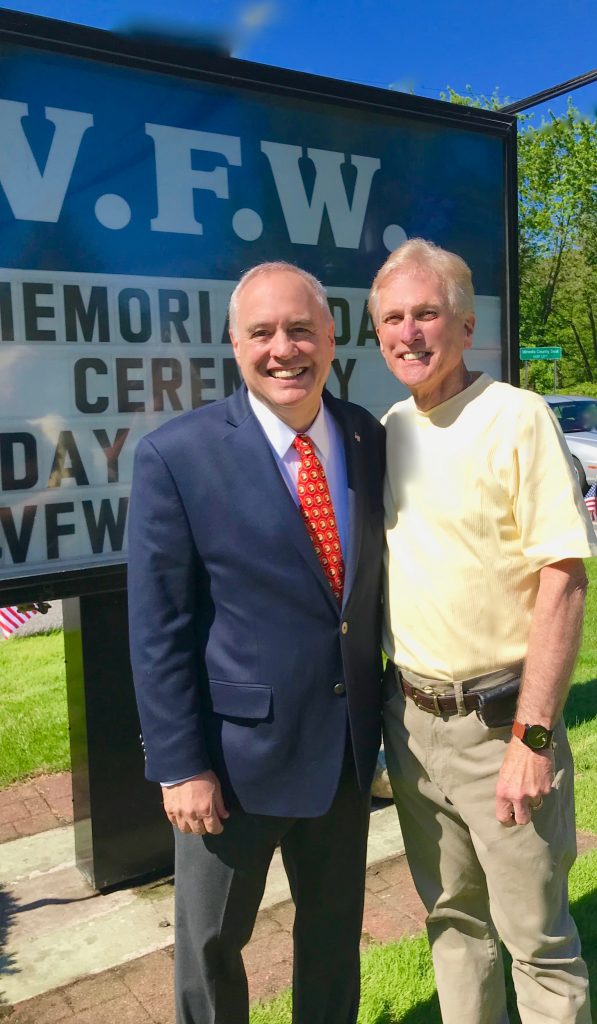
Albertson Commissioner, NYS Comptroller Speak on Memorial Day

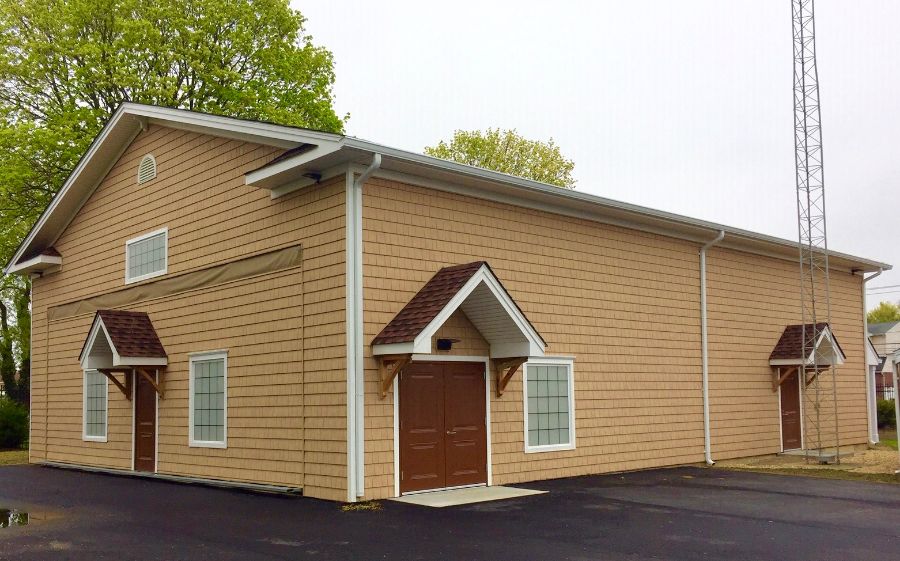
On Memorial Day, May 27, 2019, Albertson Water District Commissioner Howard Abbondondelo and New York State Comptroller Thomas DiNapoli both spoke at VFW Post 5253, Searingtown Road in Albertson NY.

Commissioner Abbondondelo, an Albertson resident, addressed the large group of assembled veterans, families and friends. “I am personally grateful to each and every veteran who served our flag, especially those who gave their all to defend it. As someone whose brother, uncles, father and grandfather served in the military, I am honored to address all gathered here as well as those on active duty who continue to keep our great country safe from all perils.”

Comptroller DiNapoli, formerly an Albertson resident, said “the courage and commitment of those we honor today demonstrate that American values are far more than words and slogans—they live in each of us. On this day and every day, let’s pay tribute and respect to our fallen heroes.”


New Iron Removal System For Massapequa

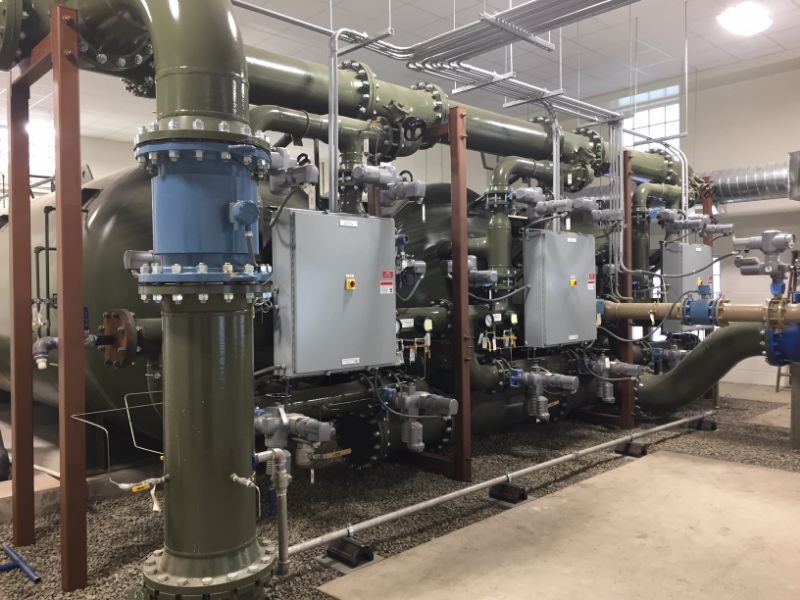
The Massapequa Water District continues to supply the highest quality drinking water at a reasonable cost to its 43,000 residents and has completed several capital projects which have replaced or upgraded the infrastructure of the District.

In particular, the construction of a state-of-the-art iron removal filtering system is now complete and the system is in service. Construction on the site began in February 2018. MWD residents will enjoy a great reduction of occurrences of discolored water within the District as a result of this project.


Bill Merklin On 1,4 Dioxane

Water Systems Engineering  Expert Bill Merklin Addresses 1,4-Dioxane Issues with Long Island Water Commissioners at Nassau Suffolk Water Commissioners’ Association (NSWCA) Meeting

Water commissioners representing 21 Long Island water districts serving on the Nassau Suffolk Water Commissioners’ Association (NSWCA), recently received a detailed presentation regarding 1,4-dioxane, one of the biggest issues facing water suppliers and Long lsland residents today. The in-depth presentation was led by guest speaker Bill Merklin, Senior Vice President, D&B Engineers and Architects, P.C., Water Supply Division (Woodbury, NY). The speaker program is part of the Association’s on-going education series.

In discussing the origins of 1,4-dioxane, Mr. Merklin noted, “Decades of industrial chemical manufacturing led to the concentrations of 1,4-dioxane that we now see in our groundwater. This contaminant can also be found in small amounts in some consumer products, ranging from shampoos, cosmetics and detergents to inks and food packaging.”

During his presentation, Mr. Merklin reviewed the regulatory status, treatment processes, and timeline realities. He commented, “One of the most promising treatments is Advanced Oxidation Process (AOP), which involves ultraviolet light and a strong oxidizing agent like hydrogen peroxide followed by Granular Activated Carbon (GAC).”  Mr. Merklin cautioned that pilot testing and other evaluations are required before design and eventual integration with other existing treatments.

Michael F. Rich III, NSWCA President and Oyster Bay Water District Commissioner, commented, “As all of our member districts await further direction from the New York State Department of Health, we truly appreciate Bill Merklin’s incisive presentation about the realities of 1,4-dioxane and potential treatment. It sheds light on an emerging threat while assisting commissioners and superintendents with developing strategies for addressing 1,4-dioxane contamination within individual water districts.”

For More Information please contactMr. Jamie Stanco with Progressive Marketing Group, Inc. via 631-756-7160, or email, jpstanco@pmgstrategic.com.

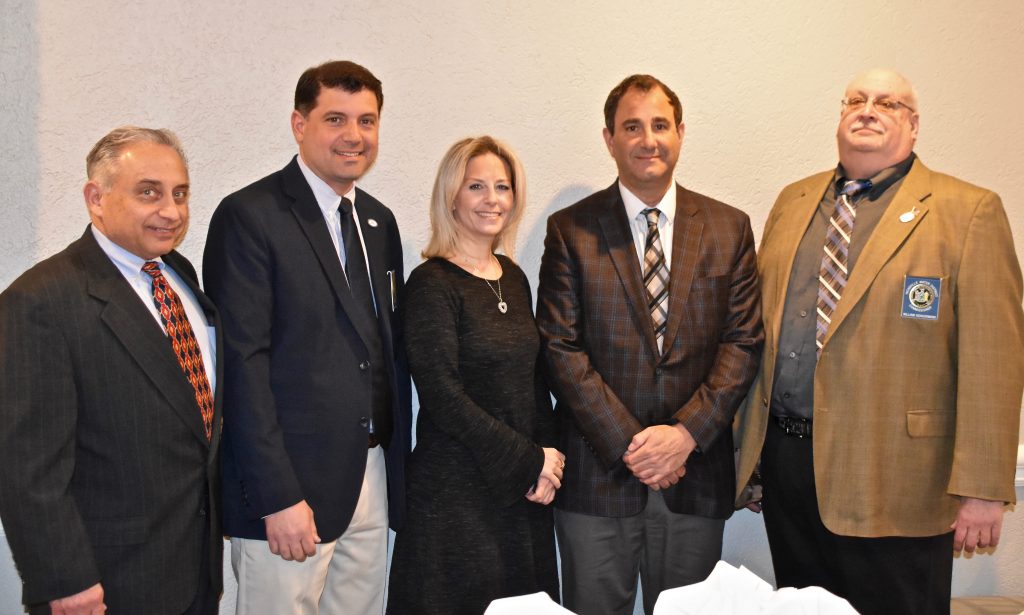
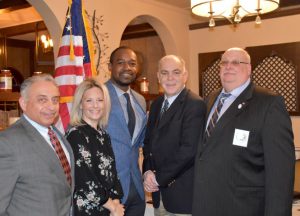
 Left to Right: Larry Zaino, NSWCA Treasurer and Carle Place Water District Commissioner; Michael F. Rich III, NSWCA President and Oyster Bay Water District Commissioner; Amanda Field, NSWCA Secretary and Plainview Water District Commissioner; Bill Merklin, Senior Vice President D&B Engineers and Architects, P.C.; Bill Schuckmann, NSWCA 1st Vice President and Hicksville Water District Commissioner.


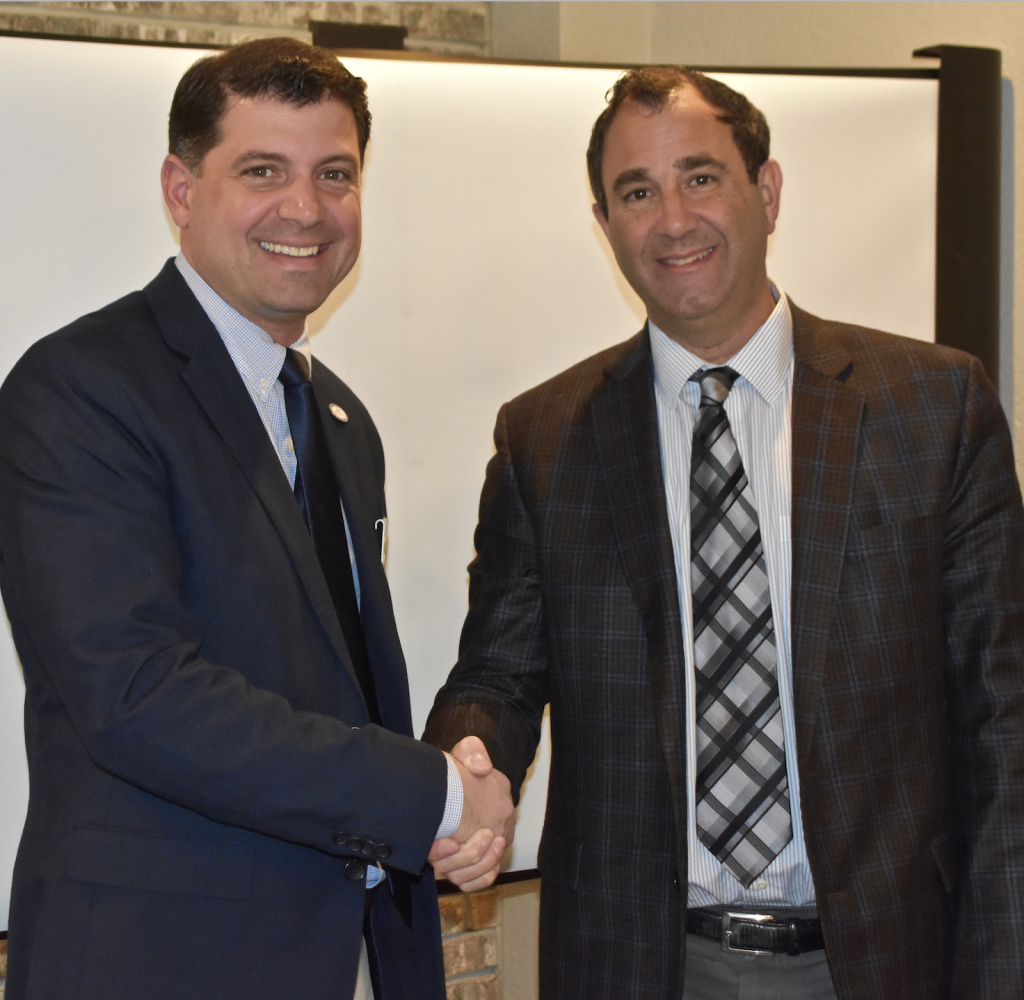
President Rich and Mr. Merklin.


Greenlawn is Suffolk’s Best Tasting…again!

Back-To-Back wins for local water provider.

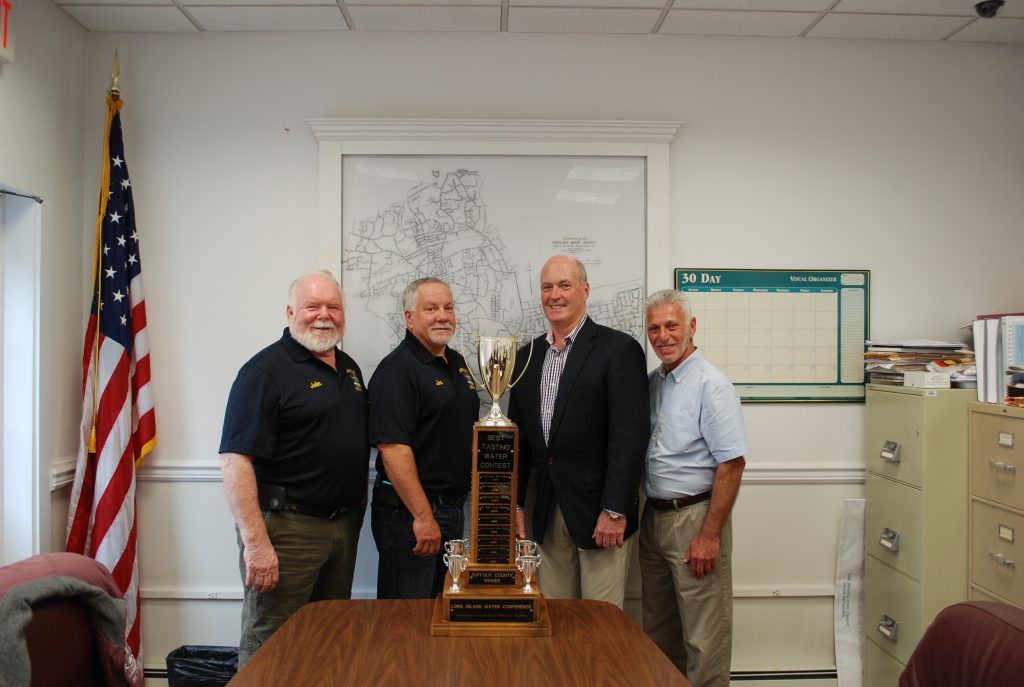
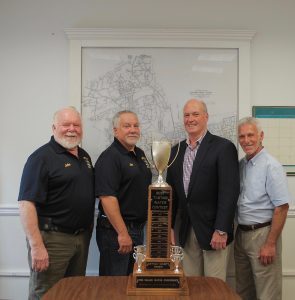
The public has spoken…loudly and clearly! For the second consecutive year (and 10th time overall), the Greenlawn Water District has been voted the Best Tasting Water in all of Suffolk County!


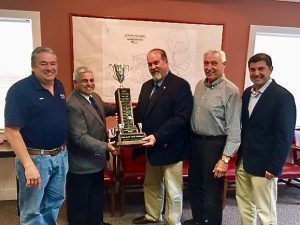
The District participated in the 33rd annual Tap Water Taste Contest which was held May 6th through May 10th at the 50,000-square foot SUNY Farmingdale Campus Center.Congratulations to the Greenlawn Water District staff, Commissioners John McLaughlin, Jim Logan and John Clark, as well as Superintendent Bob Santoriello on a superb job…again!

As the winner of the Tap Water Taste Contest, the GWD will next be entered into the regional competition. In addition to its impressive total of 10 Best of Suffolk County titles, the Greenlawn Water District has also twice won “Best Tasting Water In New York State”.

NSWCA LICAP Press Conference

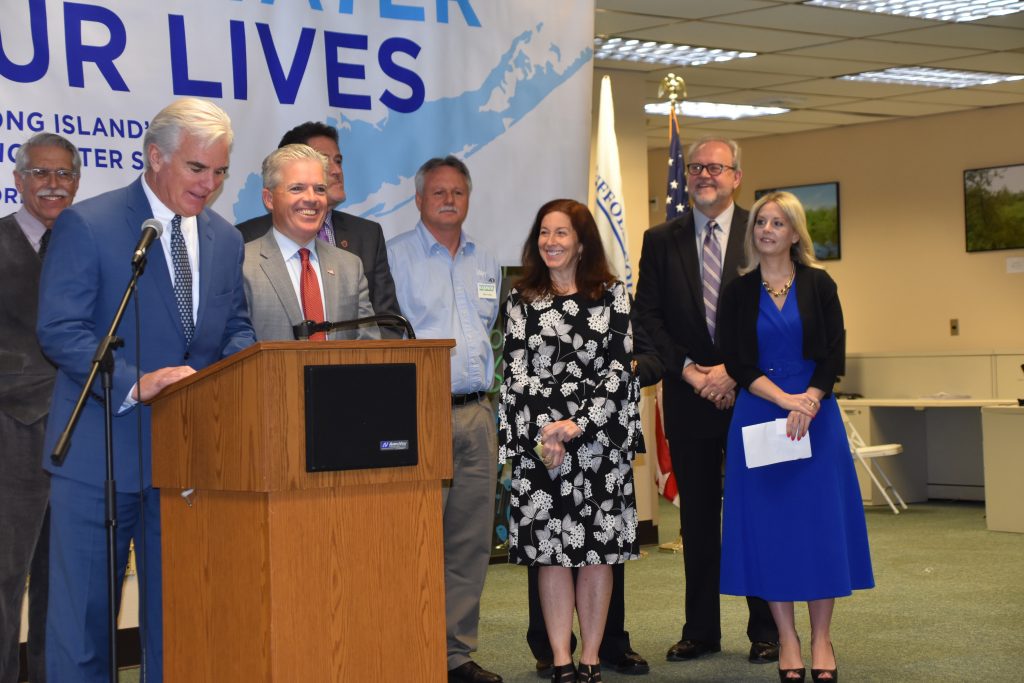
On May 16, The Long Island Commission for Aquifer Protection (LICAP) unveiled a comprehensive media campaign designed to encourage Long Islanders to embrace conservation of our drinking water resources.

Emceed by Suffolk County Water Authority Chairman Patrick Halpin, the event was held at the Suffolk County Water Authority Education Center in Hauppauge. The meeting unveiled a new logo, advertising campaign, social media pages and website based around the theme “Our Water. Our Lives.”

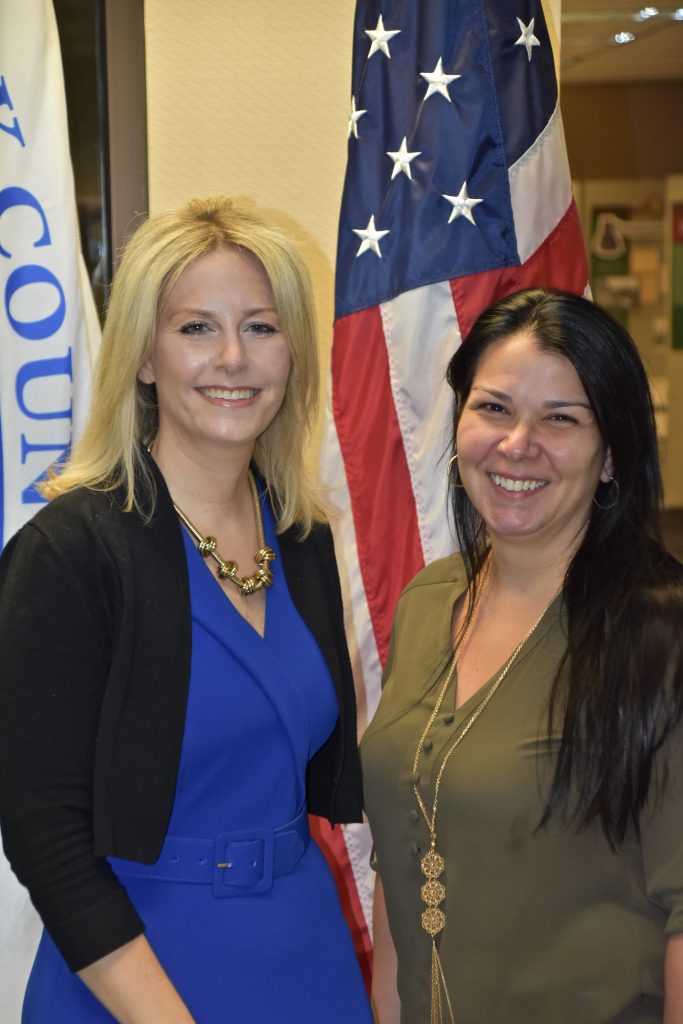
Suffolk County Executive Steve Bellone spoke in depth about the need for greater water conservation practices  and the protection of our aquifer resource. Plainview Water Commissioner Amanda Field represented the NSWCA. Commissioner Field spoke to the assembled group about the importance of conservation methods and provided practical examples.


 Paul Granger, Superintendent of the Port Washington Water District, Stan Carey Superintendent of the Massapequa Water District, Tyrand Fuller (Suffolk County Water Authority) and Adrienne Esposito (Citizens Campaign for the Environment) also spoke.

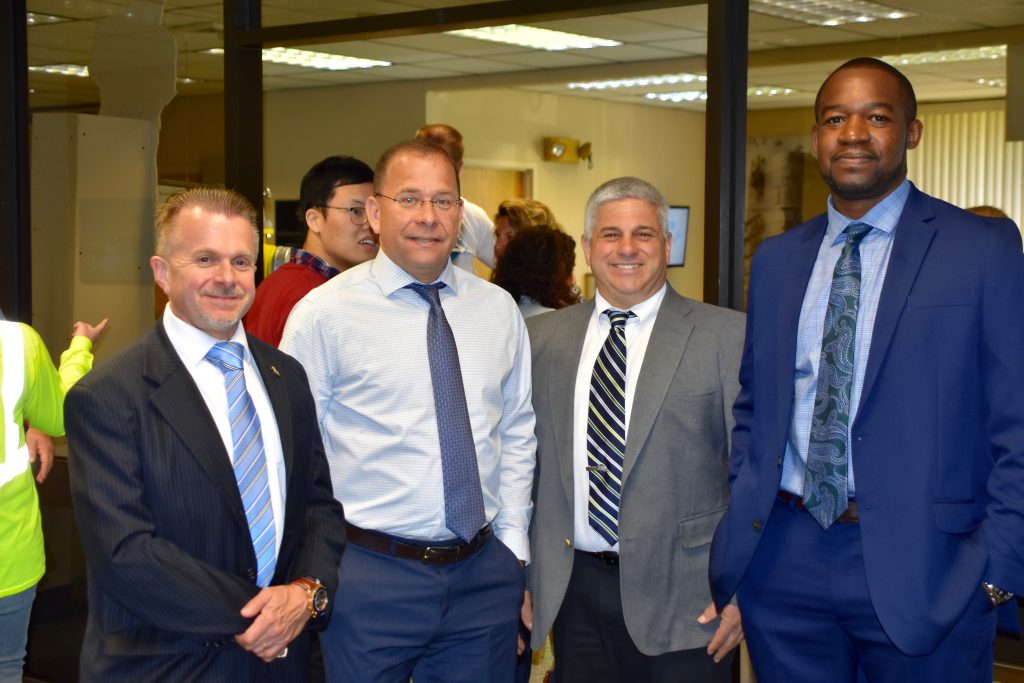
Massapequa Water Commissioner Tom McCarthy, Locust Valley Water District  Superintendent Chuck Savinetti, Massapequa Water District Superintendent Stan Carey and Dorian Dale, Suffolk County Director of Sustainability & Chief Recovery Officer, were present at the educational press conference.


Commissioner Frank Flood Passes

It is with great sadness that we have learned of the passing of  Massapequa Water District Commissioner Frank Flood.

Funeral arrangements:

Monday May13:  Massapequa Funeral Home Park Boulevard

  • 2 to 4
  • 7 to 9


Tuesday May 14: St. Rose of Lima

  • Public Viewing 4:00 to 7:00
  • Mass 7:30
  • Final Goodbye for family immediately after in Church


Wednesday May 15:  St. Rose of Lima

  • 10am Mass of Christian Burial


Water Taste Contest Begins May 6th!

AWWA Drinking Water Week* is just about here. That means that Long Island’s water suppliers will once again compete to see who will be judged by the public as the very best tasting water in each county. Who will take home the trophies for “Best Tasting Water” in 2019? On May 6th, the contest is open to all. Have a drink on us!

Last year’s winners were both NSWCA members. In Suffolk County, the Greenlawn Water District was judged to be the best, while in Nassau County, voters chose the Oyster Bay Water District as the best tasting. Will they repeat in 2019? Or will the previous year’s winners, South Huntington Water District (Suffolk) and Franklin Square Water District (Nassau) reclaim the title?  Or will other suppliers take home the gold?No one knows for sure, but by sampling and voting, residents of all districts can weigh in on this most important topic.

Organized by the Public Relations Committee of the Long Island Water Conference, the 2019 Water Taste Contest will take place May 6th through May 10th at the 50,000-square foot SUNY Farmingdale Campus Center. The NSWCA urges all members to volunteer and to assist the Public Relations Committee in manning the informational display booth.

Please notify Tim McGuire at H2M if you are interested in participating in this year’s water taste contest via email: tmcguire@h2m.com or phone: 631-756-8000 ext.1415.

For more than 40 years the American Water Works Association and its members have celebrated Drinking Water Week – a unique opportunity for both water professionals and the communities they serve to join together in recognizing the vital role that water plays in our daily lives. Please join AWWA as we celebrate drinking water! This year the theme is “Protect the Source”.


Oyster Bay Water District


Greenlawn Water District


*

NSWCA Presence at Shelter Rock

“The Water You Drink”

That was the title of a panel discussion that drew a crowd of 125 people to the Unitarian Universalist Congregation at Shelter Rock in Manhasset, March 21, 2019. The discussion was far ranging.

Scheduled speakers  Dorian Dale, Suffolk County Director of Sustainability, and New York Institute of Technology associate professor Sarah Meyland discussed funding to support toward water treatment, the need for greater public awareness and education, as well as significant issues threatening our once pristine aquifer.

With one scheduled speaker unable to attend, Port Washington Water District Superintendent Paul Granger pinch hit and  joined the panel. As usual Mr. Granger provided  excellent technical insight and first hand knowledge that clarified some assumptions. Mr. Granger pointed out that while in certain cases, advanced detection technology has been developing rapidly and changed the landscape of the industry,   water districts,  including those non-NSWCA members are diligently working to find answers and to determine best avenues of treatment.

The NSWCA was well represented at the event by Commissioners Larry Zaino (Carle Place WD), Mindy Germain (Port Washington WD), Amanda Field (Plainview WD), Mike Kosinski and Sandy Klein (Roslyn WD).  In addition Ms. Germain’s insightful questions sparked a rousing debate between panel and audience.

The panel was organized by Blank Slate Media and ably moderated by Publisher Steven Blank at the Unitarian Universalist Congregation at Shelter Rock in Manhasset.


Over 120 attended the event.

Ty Fuller Addresses Commissioners

Ty Fuller, P.G., Chairman of the Long Island Water Conference addressed a full house of NSWCA water commissioners on pressing issues of the day.

“We all live or work here on Long Island,” Mr. Fuller observed. “We, the professionals who manage, oversee and deliver the water to consumers, need unity, a focused voice that takes into consideration the needs of people across the island and is accurately communicated to the public. We must better share our experience, ideas and scientific data to build support for the common good, whether it involves reaching out to the legislature or to the people in our own districts.”

Mr. Fuller who is also Director of Strategic Initiatives and Lead Hydrogeologist for the Suffolk County Water Authority (Oakdale, NY), covered pressing issues in his presentation to the assembled commissioners. He commented that greater funding from New York State is essential to rectifying the current state of affairs, citing that a portion of the presently allocated $2.5 Billion dollars is earmarked for sewer remediation as opposed to the issues about drinking water. He further noted that funding consideration, including the potential piercing of the mandated tax cap, must be governed by individual district needs, not arbitrary numbers.


Also, Mr. Fuller called for action to change the statute of limitations for polluters of the Long Island water supply. “We must have a real-time clock reset regarding the ability to sue and to hold polluters responsible for the residual problems associated with their deeds and actions.”

NSWCA 1stVice President William Schuckmann (Commissioner, Hicksville Water District) chaired the meeting in the absence of NSWCA President Michael F. Rich III.  “Mr. Fuller’s remarks were incisive, to the point and meaningful to both our Association and to the wellbeing of Long Island’s consumers. We thank Ty for his views and energetic presentation tour group.”